From the publishers of JADPRO

CAR T-Cell Therapy Resource Center

Advertisement

Fractionated initial infusion and booster dose of ARI0002h, a humanised BCMA-directed CAR T-cell therapy, for patients with relapsed or refractory multiple myeloma (CARTBCMA-HCB-01): A single-arm, multicentre academic pilot study

Last Updated: Wednesday, September 20, 2023

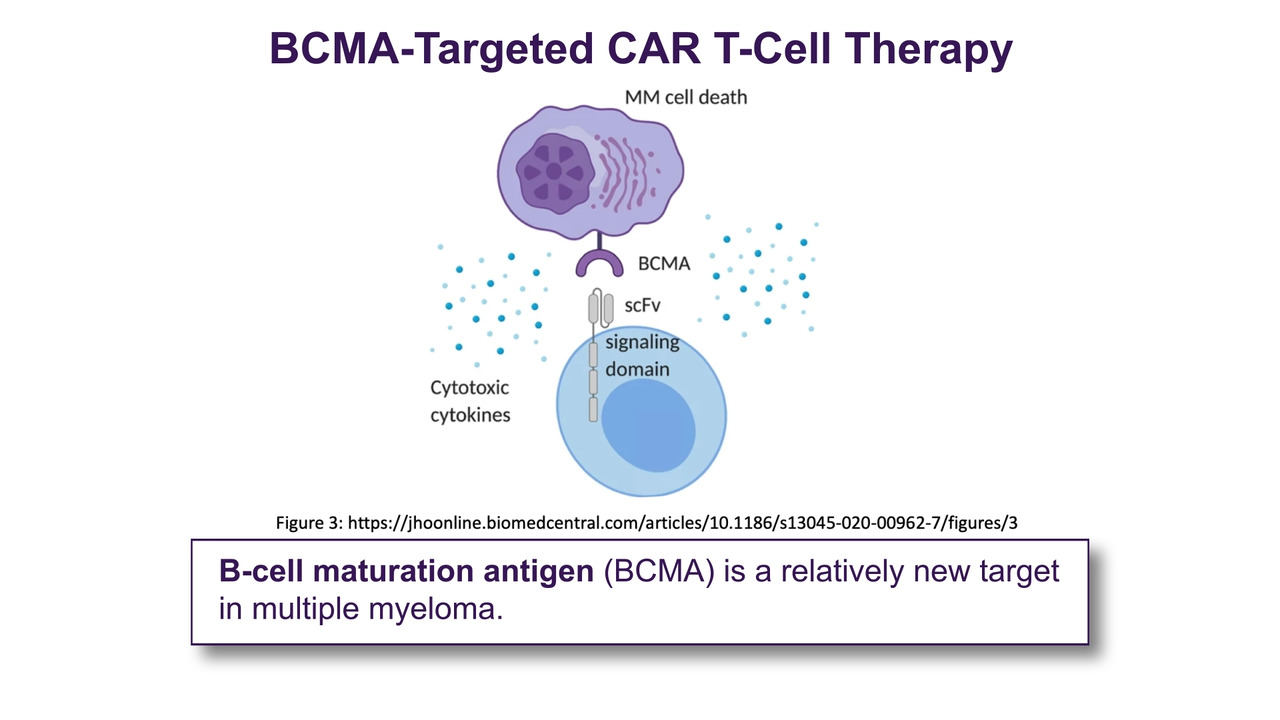
A small study of 30 patients with multiple myeloma who received ARI0002h, a BCMA-targeted CAR T-cell therapy, found deep and durable responses when ARI0002h was administered in a fractioned manner with a booster dose after 3 months. At median follow-up of 12.1 months (IQR: 9.1-13.5), 24 patients had a very good partial response or better, 9 had very good partial response, and 6 had partial response. Although no neurotoxic events were observed, 24 patients developed CRS, all at grades 1 or 2. Persistent grades 3-4 cytopenias and infections were seen in 20 patients each. One patient died due to disease progression.

The Lancet Oncology
Advertisement
News & Literature Highlights
Journal of Medical Cases

Cyclophosphamide for the treatment of refractory immune effector cell-associated neurotoxicity syndrome following CD19-targeted CAR T-cell therapy

Transplantation and Cellular Therapy

Financial toxicity in a phase I/II trial of LV20.19 CAR-T cell for B-cell malignancies a longitudinal, qualitative study

Experimental Biology and Medicine

Chimeric antigen receptor natural killer cell therapy for solid tumors: Mechanisms, clinical progress, and strategies to overcome the tumor microenvironment

Frontiers in Immunology

Impact of inotuzumab ozogamicin as bridging therapy and tumor burden in CAR-T therapy for B-acute lymphoblastic leukemia

Blood

Time of day of CAR T-cell infusion and outcomes in large B-cell lymphoma

Mayo Clinic Proceedings. Innovations, Quality, & Outcomes

Operationalizing access for chimeric antigen receptor T cell therapies: A cross-functional perspective

World Journal of Oncology

Neurotoxicity of immunotherapy: Immune checkpoint inhibitor-related encephalitis vs. immune effector cell-associated neurotoxicity syndrome

Clinical and Translational Oncology

Emerging strategies to reduce the side effects of CAR-T cell therapy: Focusing on gene editing and nanotechnology

Transplantation and Cellular Therapy

Best practice considerations by the American Society of Transplant and Cellular Therapy: Infection prevention and management after chimeric antigen receptor T cell therapy for hematological malignancies

Blood Advances

CAR T-cell toxicities: From bedside to bench, how novel toxicities inform laboratory investigations

Advertisement
Advertisement